


The Place and Value of Turkish Marble in World Architecture: From Antiquity to Today

For thousands of years, marble has been one of Anatolia's most valuable and enduring exports. The white, vein-laced stone of Marmara Island once adorned the forums of ancient Rome, the soaring sanctuaries of Byzantium and the monumental mosques of the Ottomans. Today, blocks from those very same quarries clad luxury hotels, airports, shopping centres and private villas around the world. In this article we explore the unique place of Turkish marble in world architecture, its two-thousand-year journey, and why Turkey remains the undisputed leader of the global market.
Why Turkey Is the Heart of the Marble World
Sitting on the Alpine-Himalayan mountain belt, Turkey is blessed with one of the richest deposits of natural stone on earth. Hundreds of quarries spread across Afyon, Muğla, Marmara, Bursa, Denizli, Burdur, Isparta and Elazığ yield an extraordinary range of material, from pure whites and warm beiges to dark, dramatic decorative stones and travertine.
This geological wealth translates directly into economic leadership. In 2024, Turkey exported around 2.6 million tonnes of marble building stone, accounting for roughly 44% of the world's total by volume, making it the number-one exporter on the planet. By value it sits among the top three exporters alongside China and Italy. A notable recent trend underlines its strength: rather than shipping raw blocks, Turkey is increasingly focused on higher value-added processed products, steadily raising the value earned per tonne.
Marmara Marble: A Two-Thousand-Year Architectural Legacy
Remarkably, even the word "marble" traces back to this region. Marmara Island was known in antiquity as Proconnesus, and the Greek word "marmaron" (gleaming stone) gave the Sea of Marmara its name. From the reign of Emperor Hadrian onward, stone quarried here was exported across the empire, to Rome and Constantinople above all, as columns, porticoes, pavements and sarcophagi.
Its architectural prestige reached its peak under the Byzantine emperor Justinian. The flowing, wave-like veining of the Proconnesian marble used in the floors and wall revetments of Hagia Sophia was read by the art of the age as a visual expression of cosmic harmony and sacred order. The building also paired the pink-violet tones of Afyon (ancient Synnada/Docimium) marble at its imperial gates with white Marmara capitals atop green columns, in perfect balance. That these columns have carried the weight of the great dome for some 1,500 years is the strongest possible proof of the stone's structural quality.
Marble in Ottoman Architecture
Under the Ottomans, Marmara marble was not merely retained but became a defining feature of classical architecture. Topkapı Palace, the Blue Mosque (Sultanahmet), the Süleymaniye Mosque and the Fountain of Ahmed III, all today inscribed on the UNESCO World Heritage list, show how marble expressed the power and aesthetic vision of an empire.
The master architect Mimar Sinan worked white marble masterfully into mihrabs, minbars, portals and courtyards. The fact that one of the four great columns of the Süleymaniye Mosque was brought from the ruins of Baalbek and another from Alexandria, and that ancient Proconnesian columns from the Hippodrome were reused in the mosque, shows that marble has long been a heritage that changes hands across centuries while its value never fades.
The Main Types of Turkish Marble
Turkey's natural stone portfolio is broad enough to speak to every design language. Among the most prominent varieties:
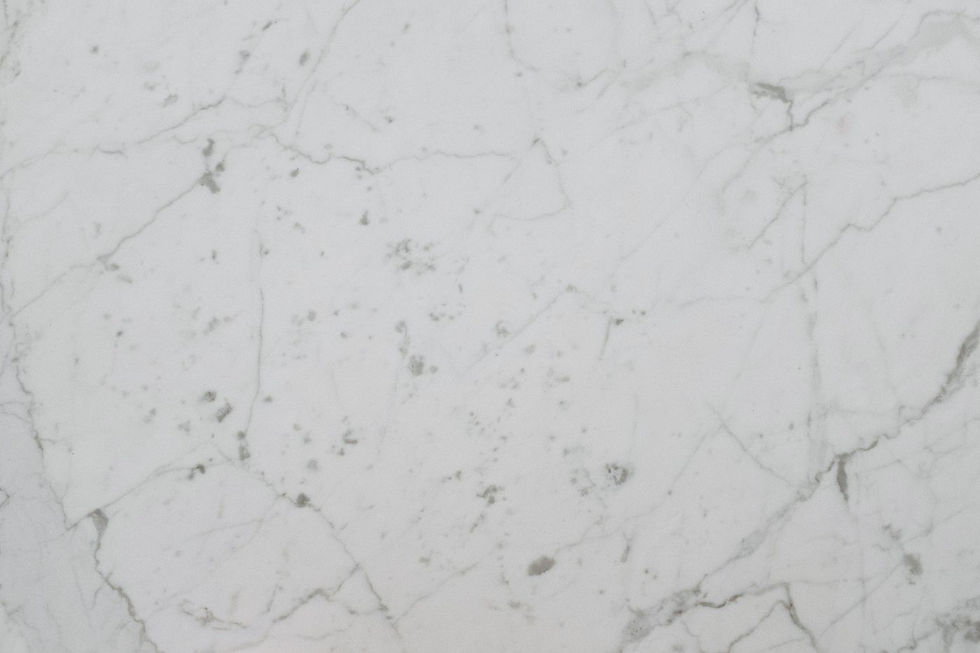
Afyon White (Afyon Sugar): A crisp white background with delicate grey or golden veining offers quiet sophistication. Ideal for minimalist and classic interiors, bathrooms and spa spaces, its translucency makes it especially suited to backlighting.
Marmara White: Bold, parallel grey linear veins on a white base give a strong, rhythmic look. It is a favourite for large-scale, statement applications such as hotel lobbies, staircases and vertical facades.
Muğla White: Increasingly chosen for projects that demand a consistent, lustrous appearance thanks to its homogeneous structure.
Bursa Beige, Burdur Beige and Crema Nova: Warm beige tones, hardness and value make these balanced choices for flooring and wall cladding.
Emperador, Toros Black and Elazığ Cherry (Rosso Levanto): Dark and colourful decorative stones that bring character to feature walls and luxury detailing.
Denizli Travertine: Delivers a timeless, natural texture for exteriors, facades and poolside applications.
Onyx, basalt and quartzite: High-impact decorative stones in the MarbleLink portfolio for bespoke projects.
Turkish Marble in Modern World Architecture
The stone of these ancient quarries is now being translated into the language of contemporary architecture. With modern surface finishes such as honed, brushed and polished, Turkish marble takes its place in leading buildings worldwide, from the vast mosque and hotel projects of the Gulf to boutique villas in Europe, luxury residences in the Far East and corporate headquarters. Book-matched walls and continuous-vein floors are among the details most sought after by the world's respected design studios in recent years.

The core reason behind this global demand is that Turkish marble combines historical prestige with the quality achievable through modern production technology. Diamond-cutting techniques, precision processing plants and an extensive quarry network give architects a sustainable supply with high colour and vein consistency, even on very large projects.
The Value of Turkish Marble: More Than Just Stone
The value of Turkish marble cannot be reduced to a single measure; it is the sum of its geological, aesthetic, economic and cultural dimensions:

Geological quality: Low porosity, high compressive strength and easy workability. The columns of Hagia Sophia, standing for fifteen centuries, are the most tangible proof of this durability.
Aesthetic richness: A wide colour palette, varied veining and, in some types, translucency give every project a distinctive character.
Economic leadership: Turkey leads the world in marble export volume and keeps raising the stone's value by shifting toward processed, value-added products.
Cultural continuity: The same quarries having been worked for two thousand years elevates Turkish marble to the status of a true heritage stone.
Bring Turkish Marble to Your Projects with MarbleLink
Based in Istanbul, MarbleLink is a Turkish marble exporter delivering marble, granite, travertine, onyx, basalt, quartzite and limestone to projects worldwide. We carry this millennia-old legacy, from ancient quarries to modern construction sites, into today's architectural vision through the right stone selection, quality craftsmanship and reliable logistics.
Contact: +90 542 842 28 99 · info@marblelink.com.tr · Instagram @marblelinktr

Comments