


Turkish Marble: A Complete Guide to Heritage, Today's Global Market, and the MarbleLink Project Partnership

Every great architectural project begins with a single decision: where does the stone come from? At MarbleLink, that question shapes everything we do. As an Istanbul-based natural stone exporter, we work under one guiding principle — "From the world's quarries, to your project" — sourcing marble, granite, travertine, onyx, basalt, quartzite, and limestone from the most distinguished quarries in Türkiye and across the globe, and delivering them as polished, slabbed, and project-ready solutions to clients in over 180 countries.
Turkish marble carries a heritage few materials on earth can match. From the 2,700-year-old Prokonnesos quarries on Marmara Island to the imperial Pavonazzetto of Dokimeion, from the marble floors of the Hagia Sophia to the slabs that line modern penthouses in New York, London, and Dubai — this is a story of stone, civilization, and trade that has continued without interruption since the 6th century BC.
This guide explores the history of Turkish marble, the current state of the global natural stone market, and how MarbleLink's project-partnership approach transforms raw geological wealth into refined architectural language.
Turkish Marble: A 2,700-Year Heritage
Türkiye sits on roughly 40% of the world's natural stone reserves — an estimated 5.1 billion cubic meters, or over 13.9 billion tons. With more than 80 distinct stone types and 120+ documented colors and patterns, it is the single richest marble geography on the planet. But the country's importance to the global stone industry isn't a recent development. It is the result of millennia of continuous extraction, craftsmanship, and trade.
Prokonnesos: The Marble That Named the Sea
On Marmara Island in the Sea of Marmara — known in antiquity as Prokonnesos — lie the world's oldest continuously operating marble quarries. First excavated by Milesian colonists in the 6th century BC, these quarries supplied stone for monuments across the Mediterranean. The Latin word marmor, from which nearly every European language draws its term for marble, originates from this very island.
During the Roman Empire, the Prokonnesos quarries were elevated to imperial status — owned directly by the emperor and managed by imperial officials. Marble blocks and semi-finished elements were shipped from here to Anatolia, the Adriatic, the wider Mediterranean, and the Black Sea coasts. By the Byzantine era, production became more sophisticated: finished architectural elements left the island ready to be installed. A semi-worked column 4.45 meters in diameter, weighing nearly 180 tons, still rests at the ancient quarry site of Harman Taş — testimony to the scale of ancient Turkish marble engineering.
Marmara marble is recognized by its characteristic gray-blue parallel veining over a white ground. Its low porosity, dense crystalline structure, and exceptional polish make it ideal for floors, columns, wet areas, and hammams. Across more than two and a half millennia, this stone has been the material of choice for builders working at the highest level.

Dokimeion (Afyon): The Marble of Emperors
Roughly 25 kilometers northeast of modern Afyonkarahisar lies the ancient city of Dokimeion (today's İscehisar), home to another category of imperial marble. The Romans called the stone from these quarries Synnadicum marmor, and like Prokonnesos, the quarries operated under direct imperial ownership — managed by the emperor's freedmen and slaves.
Dokimeion produced two stones of extraordinary status. The first, Afyon Şeker ("Afyon sugar"), is an almost milk-white marble prized for sculpture and the finest interior carving. The second, Pavonazzetto — a brilliant white field crossed by deep violet and purple veining — was the most expensive marble of the ancient world. At its peak, it commanded 200 denarii per cubic foot. Roman emperors used it for the Pantheon, Trajan's Forum, and the foundation of what would later become St. Peter's Basilica. In Istanbul, it lines the columns and decorative panels of Hagia Sophia.

Marble in the Architecture of Istanbul
Istanbul's historic silhouette is, in effect, an open-air museum of marble craftsmanship. The 107 monolithic columns of Hagia Sophia were gathered from temples across the empire — Ephesus, Heliopolis, Baalbek — while the floors, balustrades, and the imperial omphalion where Byzantine emperors were crowned are paved primarily in Prokonnesos marble, laid in patterns that mimic the rolling waves of the sea.
Where the Byzantine sea walls met the Marmara coast stood the Marble Tower — uniquely constructed entirely from marble while the rest of the walls were built of stone and brick, demonstrating that marble served as a material of prestige even in military architecture.
In the Ottoman classical era, Mimar Sinan's Süleymaniye Mosque (1550-1557) carried the tradition forward. Its four massive load-bearing columns — each over 9 meters tall, more than a meter in diameter, weighing 40-50 tons each — were sourced from Alexandria, Baalbek, the Column of Kıztaşı in Constantinople, and the imperial palace grounds. The same era produced the Topkapı Palace fountains and the great Ottoman hammams of Çemberlitaş, Cağaloğlu, and Süleymaniye, where Marmara marble's low water absorption, thermal mass, and resistance to thermal shock made it the only viable material for centuries of continuous use.
The Turkish Natural Stone Market Today
In the contemporary global stone economy, Türkiye occupies a position no other country can claim. It is the world's largest exporter of block marble, sending raw and processed natural stone to over 180 countries. Annual exports of natural stone consistently exceed two billion US dollars, with marble and travertine forming the largest categories.
Where Turkish Stone Goes
Turkish marble flows to nearly every major architectural market in the world. The largest destinations include:
China — by far the largest importer, primarily of block marble for further processing
United States — finished slabs for residential and commercial projects, especially in New York, Los Angeles, and Miami
India — fast-growing demand for both raw blocks and finished products
Saudi Arabia and the Gulf States — large-format slabs for hotels, mosques, and luxury residences in Riyadh, Dubai, Doha, and Abu Dhabi
France, the United Kingdom, Germany, and Italy — high-end design and renovation markets
Israel, Iraq, Libya, and North Africa — major regional buyers of finished and semi-finished stone
Why Architects and Designers Choose Turkish Marble
Three factors keep Turkish stone at the top of the global market:
Geological diversity. From the bright whites of Mugla and Afyon to the dramatic blacks of Sahara Noir, from the warm beiges of Burdur and Bursa to the rare onyxes of Antalya, Türkiye offers a palette no single country can match.
Block size and consistency. Turkish quarries are known for producing large, structurally sound blocks suitable for book-matched and vein-matched applications — a critical advantage for luxury residential and commercial projects where slab continuity is essential.
Mature processing infrastructure. Türkiye operates some of the most advanced cutting, polishing, and finishing facilities in the world. From standard polished slabs to leathered, honed, brushed, sandblasted, antiqued, and equator-cut finishes, the country can deliver virtually any surface specification at scale.

Türkiye's Signature Stones
Among the dozens of marbles and natural stones in active export, a few are particularly well-known to international architects and designers:
Marmara White (Marmara Beyaz) — the historic Prokonnesos marble, modernized for contemporary architecture, especially in equator-cut applications
Afyon White, Afyon Sugar, and Afyon Violet — the legendary Dokimeion stones, including the unique Pavonazzetto family
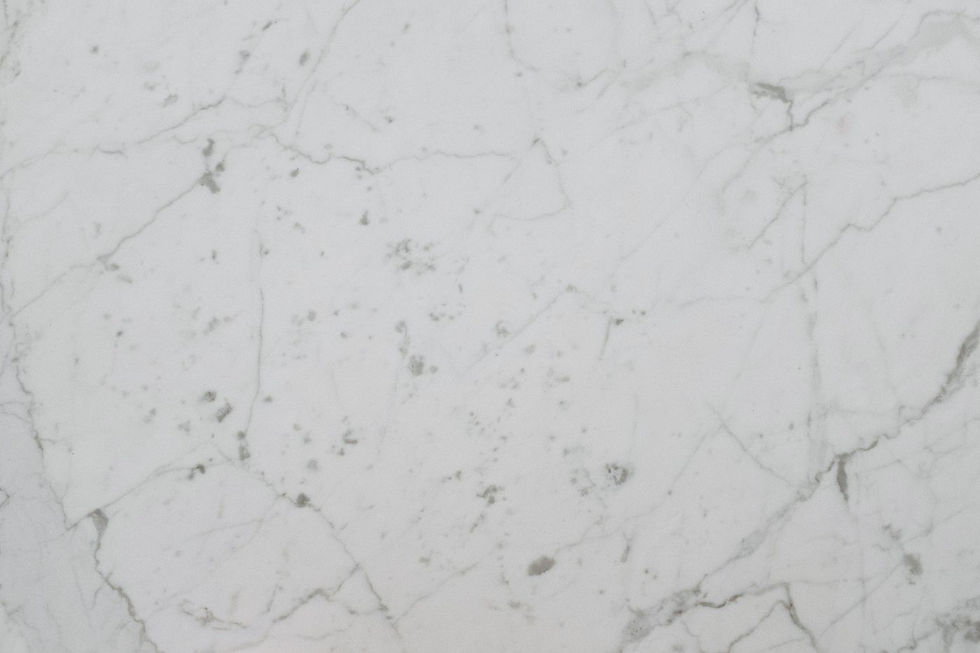
Mugla White — a crystalline pure white marble in massive demand for luxury residential floors and walls
Bursa Beige (Bursa Beji) — a warm, classic stone for both interior and exterior cladding
Sahara Noir — a deep black marble with gold or white veining, prized for dramatic feature walls and bathrooms
Travertine (Denizli, Antalya, Pamukkale) — the warm, characterful stone defining Mediterranean and Middle Eastern architecture
Onyx (Antalya, Diyarbakır) — translucent decorative stone for backlit walls and bar fronts
Rosso Levanto — dramatic red-and-white veined stone for statement applications
MarbleLink: From the World's Quarries, to Your Project
At MarbleLink, we approach the natural stone trade not as a commodity business but as a project partnership. Stone is not interchangeable — every quarry produces a unique vein direction, color saturation, and crystal structure, and matching the right material to the right project is a craft that takes years to develop. Our role is to bridge that gap: to bring the geological wealth of Türkiye and the world to architects, developers, fabricators, and homeowners who deserve a partner that understands both the rock and the room.
Our Project Partnership Model
Unlike traditional stone traders who simply sell what is in stock, MarbleLink works with clients from concept through delivery. Our process typically follows four stages:
1. Material consultation. We begin by understanding the project — usage area, traffic load, design language, sustainability targets, and budget. Based on this, we recommend a shortlist of stones that match the technical and aesthetic brief.
2. Block and slab selection. For larger projects, we coordinate quarry visits or send photographic and video documentation of available blocks before cutting. Clients can approve specific blocks and even specify cutting direction for book-matched or vein-matched applications.
3. Processing and finishing. We manage cutting, polishing, and finishing through our network of Turkish processing facilities. Whether the project requires polished, honed, leathered, brushed, antiqued, or equator-cut surfaces, we deliver to exact specification.
4. Logistics and delivery. From the port of Istanbul, we ship to over 180 countries. We manage export documentation, packaging for international transport, and coordination with local fabricators and installers when needed.
Beyond Türkiye: A Global Sourcing Network
While Türkiye is at the heart of what we do, our motto — "From the world's quarries, to your project" — reflects a deliberate global sourcing strategy. We work with partner quarries in Italy, Greece, Spain, Iran, Egypt, India, and Brazil to offer stones outside the Turkish palette when a project calls for them. Calacatta and Statuario from Carrara, Greek Thassos and Volakas, Iranian travertines, Brazilian quartzites and exotic granites — all available through a single point of contact.
This is especially valuable for projects that require multiple stones in coordinated palettes. Rather than working with three or four suppliers across different countries, our clients work with one partner who manages every line item, every quality check, and every shipping document.
Product Range
Our complete export categories include:
Marble — blocks, slabs, tiles, cut-to-size, custom architectural elements
Granite — slabs and tiles for countertops, flooring, and exterior cladding
Travertine — vein-cut and cross-cut, polished, honed, brushed, antique-finished
Onyx — translucent backlit panels and decorative slabs
Basalt — pavers, exterior cladding, and architectural features
Quartzite — high-performance natural stone for high-traffic interiors and exteriors
Limestone — beige and gray variants for facades and traditional applications
Precious decorative stones — agate, semiprecious composites, and rare statement materials
Who We Work With
Our clients span the full spectrum of the international architectural market:
Architects and interior designers specifying for luxury residential, hospitality, and commercial projects
Real estate developers building high-end residential towers, hotels, and mixed-use complexes
Stone fabricators and importers seeking reliable, large-volume supply from a single source
Contractors and installation specialists requiring just-in-time delivery for active job sites
Private clients building or renovating personal residences who want direct access to quarry-grade material

Choosing the Right Stone for Your Project
Selecting natural stone is more than a visual decision. The right specification considers six factors:
Application area — wet vs. dry, interior vs. exterior, horizontal vs. vertical surfaces dictate porosity and density requirements
Traffic load — high-traffic floors require harder stones (higher Mohs hardness) with stronger abrasion resistance
Design language — minimalist projects benefit from quiet veining or solid colors; statement designs may call for dramatic book-matched or vein-cut applications
Sustainability and traceability — transparent quarry sourcing matters increasingly to certified projects (LEED, BREEAM, WELL)
Surface finish — polished, honed, leathered, brushed, antiqued, sandblasted, and equator-cut surfaces each behave differently
Slab matching — book-matched and vein-matched applications require coordinated block selection and cutting strategy from the outset
MarbleLink works through each of these factors with every client to ensure that the final specification is the right one — not just for the look of the room, but for the way the room will be used for the next fifty years.
Frequently Asked Questions
What makes Turkish marble different from Italian or Greek marble?
Türkiye combines extraordinary geological diversity (over 80 stone types, 120+ colors) with mature processing infrastructure and competitive pricing. While Carrara is famous for Calacatta and Statuario whites, and Greece for Thassos and Volakas, Türkiye offers a far broader palette — from the historic Marmara grays and Afyon violets to dramatic blacks like Sahara Noir, warm beiges, exotic onyx, and travertine in every tone. For projects requiring multiple coordinated stones, Turkish supply is often the most efficient option.
Does MarbleLink supply only Turkish stone?
No. While our roots are in Turkish natural stone, our global sourcing network includes partner quarries in Italy, Greece, Spain, Iran, Egypt, India, and Brazil. We deliver Carrara Calacatta, Greek Thassos, Iranian travertine, Brazilian quartzite, and other international stones alongside our Turkish catalog. Our motto — "From the world's quarries, to your project" — reflects exactly this scope.
What is the minimum order quantity?
We work across a wide range of project sizes — from single-slab orders for residential projects to multi-container shipments for hotel and commercial developments. Contact us with your project brief and we will recommend the most efficient supply approach.
Can clients visit the quarries or select specific blocks?
Yes. For larger projects we regularly arrange quarry visits and provide photographic and video documentation of available blocks before cutting. Block selection by the client is one of the most important parts of our project partnership model.
Which countries does MarbleLink ship to?
We ship from Istanbul to over 180 countries. Our largest markets include the United States, the Gulf region (UAE, Saudi Arabia, Qatar), the United Kingdom, France, Germany, China, India, and the wider Mediterranean and Middle East.
How does MarbleLink handle quality control?
Quality control happens at three stages: block selection at the quarry, slab inspection after cutting and polishing, and final inspection before container loading. For sensitive projects we provide before-shipment photographic documentation and, where required, third-party quality reports.
Does Türkiye really have 40% of the world's marble reserves?
Yes. According to the Turkish Ministry of Energy and Natural Resources and industry data from Türkiye's natural stone exporters' associations, Türkiye holds approximately 5.1 billion cubic meters — roughly 40% of the world's known natural stone reserves — and is the global leader in block marble exports.
Building the Future with MarbleLink
Natural stone is the oldest premium building material in human history. The same Marmara marble that paved Hagia Sophia in 537 AD is being cut today, in the same quarries, for penthouses in Manhattan and hotels in Riyadh. That continuity is what makes natural stone different from every other material in modern architecture — and why working with the right partner matters.
MarbleLink exists to be that partner. From Istanbul, with access to Türkiye's full geological wealth and a global sourcing network beyond it, we deliver marble, granite, travertine, onyx, basalt, quartzite, and limestone — block by block, slab by slab, project by project.
From the world's quarries, to your project.
Let's discuss your project.
📞 +90 542 842 28 99
📧 info@marblelink.com.tr
🌐 marblelinktr.com
📷 Instagram: @marblelinktr
Comments